

The last of these hopefully more practical Summer pieces before I take a month’s break.
I write these articles from the perspective of 216 hours of phone free commuting, which itself followed 18 months of meditation.
So my experience of sitting with my thoughts is very different from when I started out.
These days it is far easier. The technical term for my current practice is what Sam Harris would describe as non-dual mindfulness. Combined with forgetting to do that and just thinking about what I fancy.
It wasn’t how I started at all. I’d really recommend this article about why I started and what it felt like, but equally a more nuts and bolts telling might help too.
I started meditating to tackle my addiction to technology.
The two tools I found invaluable in that were my phone and a fitness watch.
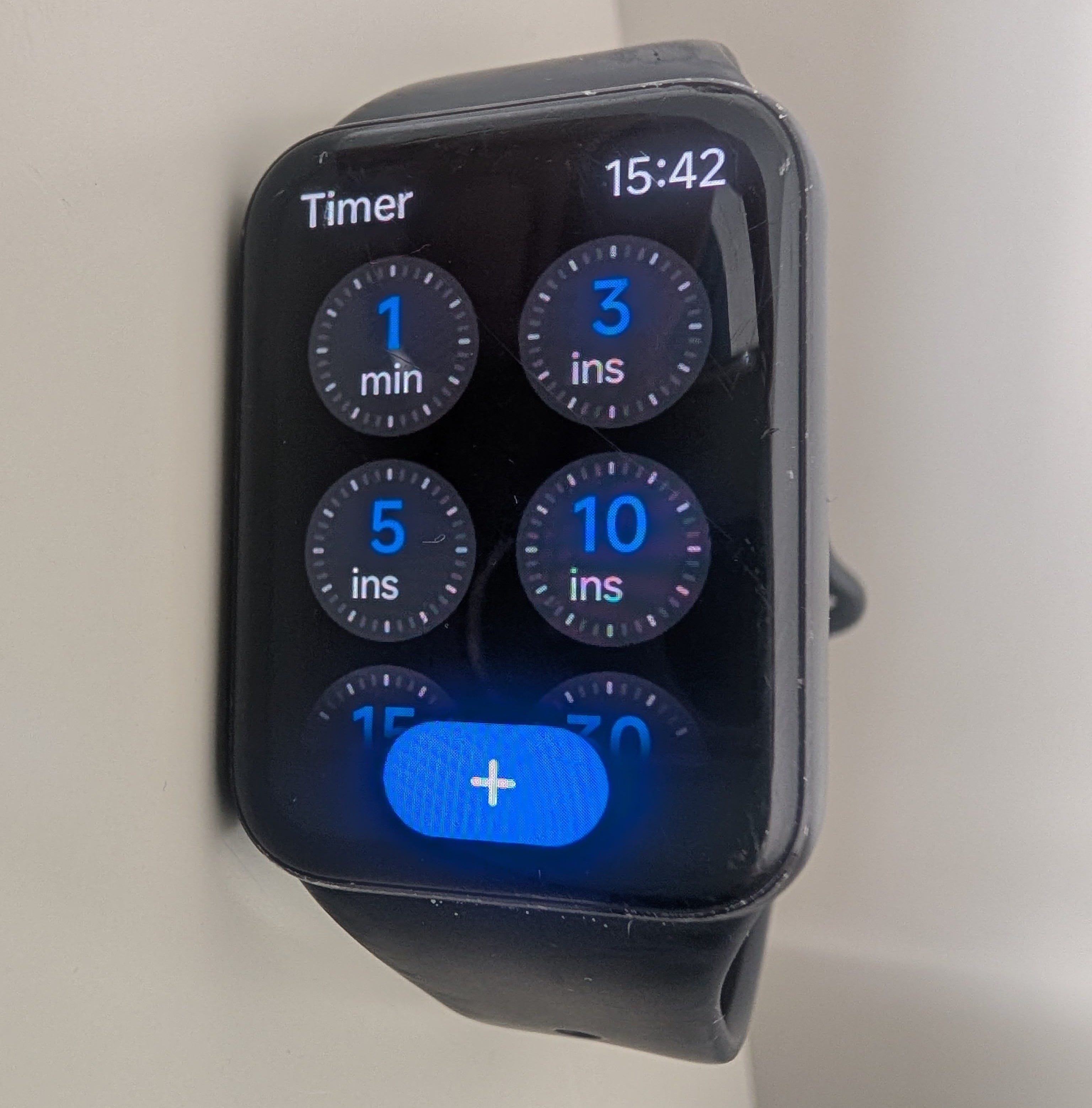
The latter first. I needed a timer for the sessions, and one I could start easily and quickly wherever I was. My very cheap watch offered a five minute timer in two taps.
I would focus on the sounds around me. Or try to - actually I would forget entirely what I was doing almost immediately. When I emerged blinking into remembering, I would celebrate and return my attention to the sounds. Then the cycle would repeat before the timer went off.
It felt deeply pointless and often very unpleasant. The thoughts that arose were mainly anxiety about work. An overthinky mess of “Does Clive hate me because of the formatting of that email?”.
I did it daily for weeks without result. I only held onto the habit thanks to my trusty phone. I used an app called Beeminder. I would record each and every day that I meditated, and if I didn’t, the app would fine me. I was doubly conscious of the threat because it operated through a widget on the front page.
And that wasn’t the end of my phone’s involvement. If the sounds around me were difficult to use for focus, I would use my phone for Tibetan Singing Bowl gongs on Spotify.
It was about five weeks before I noticed any effect. I’ll write more about that another time, but when the gains did come, they appeared unconnected to my meditation.
The first clue, curiously, was a decline in Sunday Blues.
When I began, most of my understanding about meditation was from a course on Calm I had listened to by Jeff Warren. (I’d say his stuff is better than the app - find him here).
Jeff talks about exercising “muscles” in the mind. Thanks to this analogy, I was able to keep going without an expectation of immediate relaxation. If I’d had this goal, I’d have quickly given up - as it palpably didn’t work.
I also learnt from Jeff Warren that the object of focus was unimportant. It was only fodder for developing concentration and to act as a contrast to the thoughts that arose.
It helped that I had come into this battling my phone addiction. Because of it, I had a curiosity about my mind rather than an expectation of calm. Also, in building my concentration, I imagined I was rebuilding my phone-shattered attention.
Though I started mainly at home, the commute - with ambient train noise as a focus - quickly emerged as a very handy time to do it. Over the weeks, the timer increased from 5 to 10 minutes, and soon enough the end of a 15 minute train journey marked the end of a meditation.
My practice changed over time. But the endless cycle between focus, forgetting, noticing the mind wandering and pulling it back to the focus, remained crucial for months.
Is this effort necessary?
Obviously I can only project from my own experience. And I’m going to say yes and no.
The no first.
Over five years of fighting the phone, 18 months of meditation and over 200 hours of phone free commuting, I feel like I’ve learnt a huge amount about phones and my mind. I’m convinced phone use creates in me a pervasive fog of glum anxiety that’s hard to perceive until it lifts, and that the best way of keeping it at bay is to schedule rigorously protected daily mental rest.
But it seems unlikely that meditation is the only way of getting that rest. I would guess it can be achieved using a wide range of activities, like reading or swimming or gardening.
You might call these activities meditative. Or perhaps boring.
During these activities the mind will likely wander where it will, and I suspect that gives it the rest and breathing space it needs.
But here’s the argument for the effortful training.
Mind wandering for me was not a pleasant experience. It was inseparable from overthinking and rumination. (And, by the way, the need for distraction from that discomfort likely drove a lot of my phone use.)
I didn’t know it at the time, but the focus / forget / return drill taught me the skill of mindfulness. That gradually changed my relationship with my negative thoughts and made them bearable to sit with.
I’m convinced I would never have achieved any distance from my thoughts without this effortful training. I’d read pieces lauding mindfulness before, and believed I understood what it meant. But I was flat wrong - I didn’t know what mindfulness was until those weeks of hard training kicked in.
Meditation is just one form of daily mental rest. But for me it’s a highly portable form that has slotted neatly into my busy life. It’s taught me to see far more clearly the effects of the phone on my mind, it’s made doing nothing a less painful choice and it’s reduced pickups that would otherwise have been automatic.
But if you choose to build some rest in your day in a different way, I’d recommend importing one feature at least from the meditation world: patience.
Whatever you do isn’t going to deliver benefits in the moment. The fruits of a rested mind develop over weeks of steady practice. After all, if it delivered in a straightforwardly joyous and immediate way, the commute wouldn’t be full of phone fiddling.
At least that’s where I’m at on all this at the end of Phone Free Will Season One anyway. My evolving understanding of how this all fits together - phone free time, mental rest, meditation and mindfulness - is the mission of this Substack.
I hope it’ll serve as a thousand reasons to put down the phone, and an ongoing experiment into how that is best done.
Thank you so much for reading this! I’ve enjoyed writing it hugely over these months. My dream one day is to write a book about it, so working through it all on here has been invaluable.
Heartfelt thanks go to everyone who has helped shape and improve my writing with their comments over these months.
If you ever fancy reading more, it’s all available (and neatly categorised) at phonefreewill.com.
If you know anyone who’d be tickled by it, I’d really appreciate it if you shared it with them.
See you in mid-September,
PFW
So great to discover this page! You articulate the realities of meditation so well. So many people try it once and conclude they get nothing from it or 'they can't do it' - the benefits are cumulative and gaining that little bit of space between myself and my thoughts is the real beauty of it. You've given me lots to think about in terms of phone use as well, thank you!
Remember a break IS doing something. Maybe the greatest thing! Thanks for your persistence. Look forward to the book.