

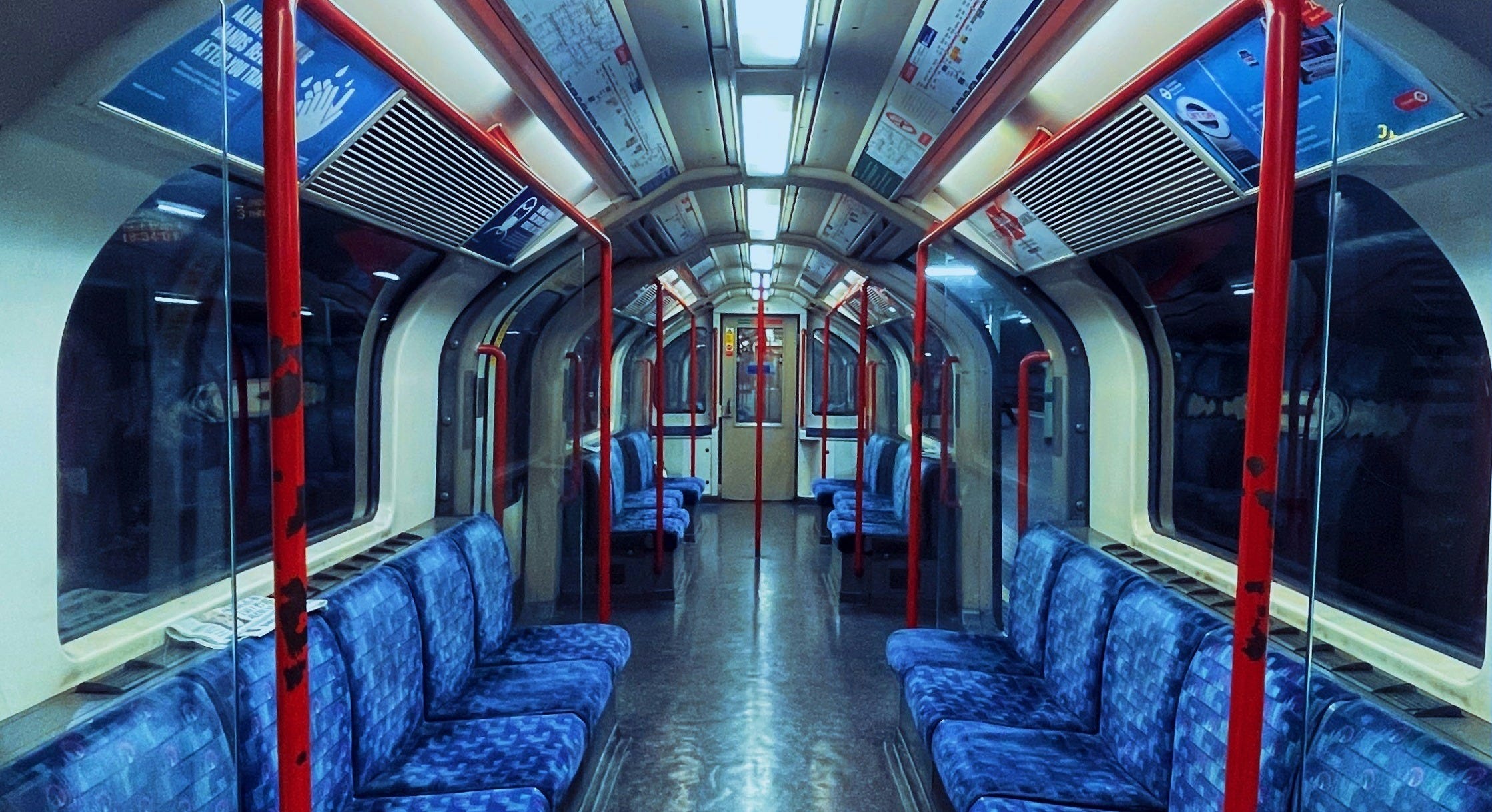
After a week away from the commute, a short one this week.
One of the advantages of spending two hours in silence each day is that ideas for these articles just pop into my head. I’ve been reading for years about the mind, the brain and phones. And then, on the commute, my mind swirls it all around and offers up (or vomits up) ideas for articles entirely unbidden. As a High Vis Idiot I don’t like to be lofty, but honestly I am visited by some sort of weird messed-up commute muse.
But not last week, I was having too much fun for this to happen.
And what’s more, it was hard getting started on Monday morning. Though I’m now into my fourth month (next week will mark 100 hours of mental silence), it felt a little like starting again.
It took me back to the very early days of the Phone Free Commute. And the very first benefit I noticed.
And although I think there are a thousand brilliant reasons to do what I’m doing, if I had to pick the number one piece of advice for any public transport commuter based on my experience…
If you stop using your phone on your commute home you might feel a lot better in the evening.
The weekday evening can feel pretty short. No-one really expects much of it. But added together these unloved hours are a significant chunk of life. If you can make them feel better, it’s a huge prize.
And if you can stop being such a grumpy A-hole in them (no offence), everyone you live with will thank you.
Inside the commuter’s brain
Though I’ve been away from the commute, little has changed. People are still scrolling away like crazy - especially on the journey home, when it’s easy to imagine they are distracting themselves from the mental hangover from work.
Watching them reminded me of a brilliant piece I’d seen on Substack by Juliette Ryan.
She argues that the brain undergoes chemical changes after one hour of heavy phone use:
Your motivational baseline drops. She writes that your dopamine receptors “shrivel inwards (internalise) like curling paper under a hot flame”.
Your ability to get pleasure fades. Opioid receptors desensitise.
Unease increases. Dynorphin (which Ryan describes as anti-endorphin) builds up.
She suggests very little of this is felt during the act of scrolling, but it builds up a chemical debt we have to repay as our brain recovers.
As a rule of thumb, Ryan estimates if you scroll for an hour, the debt is felt for two. If she’s right, it’s easily enough to ruin the short weekday evening.
She lists out a range of clever ideas for recovery.
But unfortunately at this point our commuter has brought this addled brain home to their family and is now engaged in what’s laughably called “Quality Time”.
Tragically, they might have rushed home for their kids’ bedtime.
I’m not an expert on the science. I tend to think in terms of the felt experience. I’ll bet that for this poor commuter their bad feeling doesn’t feel like chemical imbalance generated by the phone use. It instead manifests in unease about how everyone hates them for the stupid thing they said at work (this piece about that is the most popular I’ve written).
Unfortunately bad moods aren’t easily attributed to their rectangular creator.
The Evening Airlock
Beyond avoiding the phone, I’d argue there’s lots of benefits to doing nothing on the commute home. It gives us space to process the worries of the day.
And there are practices drawn from contemplative traditions that can help us handle our restless anxiety, and also to have confidence that we are actively training our brain to counteract the phone’s effects in the long term. (I’ll write a little more about this next week).
And I’d argue these techniques work for everyone, not just public transport commuters - we can find this airlock anywhere.
But even if none of that’s for you, please read Juliette’s article and treat your brain kindly. If you don’t fancy silence, do a puzzle, read a book, or as Jeremy L once suggested, write out the worries of the day.
Try giving the phone a break on the way home. Your loved ones might thank you.
This is part a series of articles following 1,000 hours of silence on the commute - here’s where it all began
If you know someone who’s tired of their phone use (or if you know someone whose phone use you are tired of) please consider sharing with them.
This is one devastating effect of a dopamine debt I had never considered - and you've completely opened my eyes to it.
You're absolutely right. A scroll session on the commute home could have you bringing a shell of yourself home to your family. But the point you raised about misattribution is even more insidious - the sour mood gets blamed on something else entirely, triggering unnecessary rumination that further poisons the quality time you rushed home for.
Your "evening airlock" framing is something I'll be thinking about for a while. There's something in the idea of a deliberate decompression chamber between work-self and home-self that goes beyond just phone avoidance - and I think this is a practice we would all be wise to adopt.
Thank you for spreading awareness about this. And for walking the talk, no less. This was a great read! (And I truly appreciate the shout-out.)
The misattribution point is the most underrated part of this. The phone gets a pass because the mood feels like it's about something real, like the thing someone said at work, the dinner that needs making, the general weight of the day. The actual cause is invisible because it arrived gradually.
I commute without headphones or a phone — not as a practice, just because I find it more comfortable. The difference in how I arrive somewhere versus the people around me who've been scrolling for 40 minutes is visible. Not just mood, but response time, eye contact, the speed at which they re-enter the room. It takes a while.
The best ideas I've had didn't come at a desk or in a brainstorm. They came in the shower, on a walk, somewhere the brain was allowed to just wander. Boredom isn't a gap to fill — it's where the thinking actually happens.
The airlock framing is exactly right. It's not about the phone, it's about having a decompression chamber at all.